
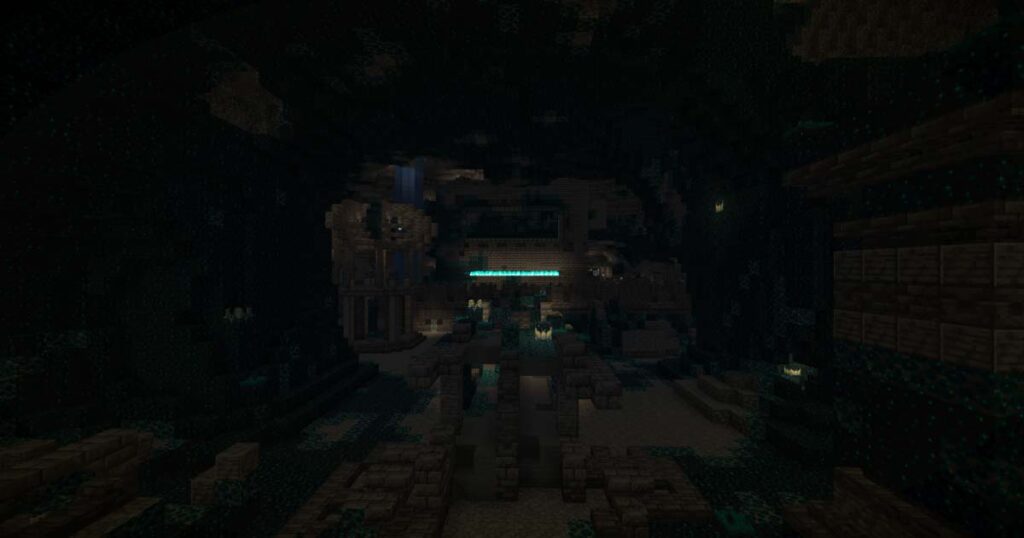
Finding an Ancient City is one of Minecraft’s more unnerving treasure hunts. The ruins are enormous, the loot is tempting, and the one creature you really don’t want to meet is practically built into the alarm system.
The good news: you don’t have to fight the Warden to explore an Ancient City. You need to find the right underground area, understand what sets off sculk shriekers, and resist the urge to sprint toward every chest.
Quick answer: Where are Ancient Cities?
Ancient Cities generate deep underground in the Deep Dark biome, with their structure centered around Y level -51. Mojang recommends searching beneath mountainous terrain such as jagged peaks or snowy slopes. Find a large cave system in that area, make your way down safely, and look for the dark sculk-covered environment. Not every Deep Dark cave contains an Ancient City.
That location advice comes from Minecraft Help’s rare-structures reference and Mojang’s Ancient City feature.
Before you go: A simple preparation checklist
You can make the trip with basic equipment, but an Ancient City is an awful place to discover that you forgot the essentials. Bring:
- Wool blocks and wool carpet. These are your most important tools for reducing vibrations around sculk sensors and shriekers.
- A pickaxe and spare building blocks. Useful for reaching caves and creating safe routes. Don’t mine blindly around active sculk.
- Food and dependable armor. You may need to retreat through hostile caves before reaching the Deep Dark.
- Torches and a way to retrace your path. Darkness can make navigation difficult, even though torches do not disable sculk alarms.
- An inventory with room for loot. The trip is much less enjoyable if every chest forces a five-minute inventory reshuffle.
Don’t rely on armor to win a fight with the Warden. Mojang describes it as a threat that is generally better avoided than challenged directly.
Step 1: Search beneath high terrain
Look for mountainous biomes, particularly jagged peaks or snowy slopes. These are search clues, not guarantees that a city is waiting underneath. If you already know where a huge cave descends beneath a mountain, that’s a sensible place to begin.
Use natural cave passages or carve a controlled staircase down. Never dig straight down. Ancient Cities occupy very large caverns, and a surprise fall is not the introduction you’re looking for.
Keep an eye on your Y coordinate as you descend. The target is the neighborhood of -51, but you may encounter sculk and the opening of a city before reaching precisely that level. Coordinates help focus the search; they do not pinpoint an entrance.
Step 2: Recognize the Deep Dark before you make noise
Sculk-covered floors are your warning that you’re entering Deep Dark territory. The Ancient City itself is a broad structure with corridors, towers, and ruined buildings rather than a small dungeon room.
Stop moving quickly once you see sculk sensors or shriekers. A sculk sensor reacts to vibrations; a sculk shrieker can sound an alarm. If enough naturally generated shriekers are triggered, a Warden may emerge. Mojang explains the relationship in its sculk shrieker guide.
A common mistake is to assume every dark patch of sculk means you’ve found a city. Explore the Deep Dark carefully until you see the actual ruins.
Step 3: Use wool to make a quieter route
This is where the wool earns its inventory space. Place it deliberately around the sculk components you need to pass. Mojang specifically advises placing wool between a sensor and shrieker to interfere with the alarm signal; surrounding a shrieker with wool is an even stronger precaution, provided you can do it without setting off another sensor.
Move slowly, crouch when passing sensitive areas, and favor a planned path over frantic repositioning. Avoid stepping directly on sculk sensors: sneaking isn’t a magic off switch for every interaction. Placing, breaking, and moving around blocks can also create vibrations, so don’t start demolishing a corridor just because you’ve got wool nearby.
Treat every sensor-shrieker pair as a little puzzle. First see what surrounds it. Then decide whether you can pass around it or need to dampen it. The best solution is often simply choosing another route.
Step 4: Loot selectively, not recklessly
Once you reach the ruins, scan the floor before opening a chest. Plan how you’ll approach it and how you’ll leave. There’s no prize for emptying every container in one noisy lap.
Why go through all this trouble? Ancient City chests can contain Swift Sneak enchantment books, and the ruins can yield echo shards used for a recovery compass. Mojang’s official Wild Update notes establish the Ancient City’s exclusive Swift Sneak loot, while its Ancient City overview identifies echo shards and other discoveries.
Prioritize the chests that are safely accessible. If a route would require repeated trips past active shriekers, consider leaving that section for another run.
What if a Warden appears?
Do not charge it. The Warden detects vibrations and can also track nearby targets through smell. It is not an ordinary enemy that becomes harmless when you’re standing behind a wall; Mojang also documents a ranged sonic attack that can reach through obstacles.
If one emerges, stop creating unnecessary vibrations, keep your distance, and retreat carefully by the path you already cleared. Do not assume that stacking upward or walling yourself into a tiny box makes you safe. The priority is to get away without drawing more attention, not to finish the chest you were opening.
Mojang’s Warden behavior notes and sonic-attack changes explain why avoidance is the better plan.
Troubleshooting: When the search isn’t going well
You found the Deep Dark but no city. That’s possible. A Deep Dark biome is not a guarantee of an Ancient City. Continue searching through other large deep caves beneath suitable terrain rather than endlessly circling one sculk patch.
A shrieker activated while you were crouching. Check where you walked and what you interacted with. Crouching reduces many vibration problems, but sculk sensors and nearby block interactions still require attention.
You can’t see anything after an alarm. The Darkness effect can make visibility fluctuate. Torches help you mark routes, but they don’t simply cancel the effect. Prioritize remembering the way out instead of wandering farther into the city.
You want to mine the shriekers away. Breaking blocks near sensors can create vibration risks, and you may not be able to see every sensor from your position. A wool-lined detour is often the less risky approach.
An Ancient City rewards patience more than bravery. Find the right cavern, take control of the sound around you, and treat the ruins like a stealth challenge rather than a loot sprint. You’ll leave with more treasure – and a much better story – if the Warden never has to introduce itself.