
A sword fight can be more than a string of flashy animations
Phantom Blade Zero has a particularly attractive promise: a martial-arts action game where attacks look impossibly elaborate but still make sense as part of a fight. Screenshots and trailers can demonstrate style, but they can’t settle the more important question. Is the player directing those spectacular movements, or merely triggering them and watching the choreography unfold?
The hands-on critical response suggests S-Game has done more than create an impressive highlight reel. Reviewers at TechRadar and GamesRadar+ both single out the combat as a major achievement. The praise is specific: weapon variety, encounter design, expressive animations and the way movement links one exchange to the next. These are different parts of the same system, and agreement across them is more meaningful than a general compliment about how cool the game looks.
This is a research-based Critical Overview based on official information and independent hands-on criticism. Reespawn has not personally played or benchmarked the game. The goal is to help readers understand the design tradeoffs, not imitate a first-person review. There are real reasons to be excited by the combat, and also reasons to be cautious about the broader adventure supporting it.
The heart of the game is movement
Phantom Blade Zero draws on wuxia traditions and martial-arts cinema. Its protagonist Soul moves through a dangerous world where weapons, duels and supernatural threats are closely tied to a story of betrayal and political intrigue. That identity helps explain the game’s emphasis on fluid action: the fantasy is not merely to hit hard, but to move with purpose and style while doing it.
TechRadar’s review highlights the interplay between weapon types, secondary techniques called Phantom Arts, sound design and elaborate finishers. GamesRadar+ similarly praises the combination of smooth fights and thoughtfully designed weapons. The interesting element is that variety seems to come from how the player combines actions rather than simply from acquiring weapons with larger damage numbers.
A combat system like this lives or dies on legibility. A sword swing can be beautiful, but if the timing of its effects is impossible to read, visual flair becomes an obstacle. The independent reviews’ enthusiasm suggests the game often maintains that balance. Still, a polished duel is not enough to judge the whole experience. Encounter pacing, exploration and narrative direction determine whether the excitement grows or gets diluted over time.
There is also an important expectation to correct: GamesRadar+ argues emphatically that Phantom Blade Zero should not be approached as a conventional Soulslike. A challenging action game does not automatically share the deliberate movement, progression patterns or punishment structure associated with that subgenre. Readers expecting Elden Ring with a different visual theme may be looking for a game that S-Game did not make.
Bosses as the real showcase
Boss encounters appear to be the most persuasive demonstration of Phantom Blade Zero’s identity. The combination of weapon creativity and elaborate enemy designs gives those confrontations an almost choreographed character. The challenge is making the fight feel like the player’s achievement, not just a cinematic event happening around them.
Reviewers are notably positive about boss variety. TechRadar calls attention to inventive encounters, while GamesRadar+ points to the variety of hidden bosses and equipment rewarded through exploration. This connection matters: if exploring a new route can lead to a different kind of confrontation or a weapon that changes later fights, wandering through the world becomes part of combat progression rather than a pause between set pieces.
That design can also create a productive form of curiosity. A new weapon isn’t only a collectible; it may change how players approach familiar enemies. The best action games give players room to discover personal preferences without making every encounter solvable through a single dominant tactic. The reviews suggest Phantom Blade Zero is especially interested in that kind of experimentation.
We should be careful not to overstate the conclusion. The published reviews support high-quality combat and imaginative bosses, but they don’t establish that every weapon is perfectly balanced, every difficulty option is equally satisfying, or every fight will appeal to every player. Those require more systematic testing than the available evidence provides.
Exploration has more purpose than the trailers suggest
The game’s elaborate combat has understandably dominated its promotional identity, yet independent reviews also emphasize the world around it. GamesRadar+ describes an interconnected environment with secrets, hidden opponents and powerful items. TechRadar praises the variety of areas and their visual presentation.
This is important because action games can suffer when the only meaningful decision is which direction to move toward the next arena. A world with purposeful detours allows combat and exploration to reinforce one another. Finding a weapon can reshape a fight; discovering a challenging boss can test a new setup; noticing an alternate route can make the setting feel authored rather than artificially expanded.
S-Game’s visual direction also appears to be doing significant work. The blend of historical influences, surreal elements and carefully staged movement gives the game a distinctive identity. A lavish environment is not automatically an interesting space, of course. The stronger evidence is that critics connect the presentation to actual discovery and challenge, rather than praising scenery in isolation.
There may still be a pacing issue. TechRadar notes sections where momentum slows, even as the reviewer remains highly positive overall. This is a common tension in action adventures: a world needs room for discovery, but a game built around exciting fights can frustrate players when too much time passes between them. Whether that tradeoff feels restful or disruptive may depend on what a reader wants from the experience.
The story doesn’t always keep up with the swords
Narrative clarity is the most consistent reservation across the sources consulted. TechRadar finds the story difficult to follow at points, and GamesRadar+ identifies inconsistent storytelling as a weakness. That is significant because the game’s martial-arts inspirations do not merely provide an aesthetic. Wuxia stories often depend on complicated relationships, loyalties and moral codes. If those dynamics become hard to track, important confrontations may lose some emotional force even while their choreography remains dazzling.
The issue may be partly one of delivery rather than ambition. A story rich in named characters and factions needs clear introductions, context and rhythm. When exposition competes with a constant stream of spectacular fights, players may remember an opponent’s attack pattern more vividly than the reason two characters are fighting in the first place.
That doesn’t mean Phantom Blade Zero lacks a worthwhile narrative. It means the strongest documented reason to play seems to be action and world exploration, not the promise of an effortlessly absorbing plot. Readers who primarily come to games for characters and storytelling should understand that distinction before buying. Readers willing to accept a demanding or uneven plot in exchange for inventive encounters may be considerably more satisfied.
The critical overview should also avoid major plot spoilers. The available evidence supports discussing delivery and pacing without revealing story turns. Criticism is more useful when it tells readers what kind of experience to expect, rather than taking away the discoveries that might make it work for them.
Performance claims need platform context
Platform reporting is one area where careful attribution is essential. TechRadar’s reviewer describes playing on PS5 Pro in a Balanced mode targeting 40 frames per second, with only occasional minor stutters in that individual experience. The same review identifies a Performance option targeting 60fps. Those are observations and mode descriptions for one review configuration—not promises for every PS5, display or patch.
GamesRadar+ mentions some pre-launch bugs. That caveat matters, but it would be inaccurate to treat a pre-release build as conclusive evidence of the game’s current condition. Conversely, it would be equally careless to announce that problems have been fixed without checking patch notes and updated testing. As of this writing, the evidence allows us to flag the issue, not to issue a broad technical verdict.
Accessibility features also deserve scrutiny. TechRadar reports subtitle size options, controller presets, adjustable camera shake and some visual settings, but notes the absence of fully remappable buttons. For players who depend on remapping, that may matter more than any discussion of animation quality. This is a good reason not to reduce the game’s appeal to combat spectacle alone.
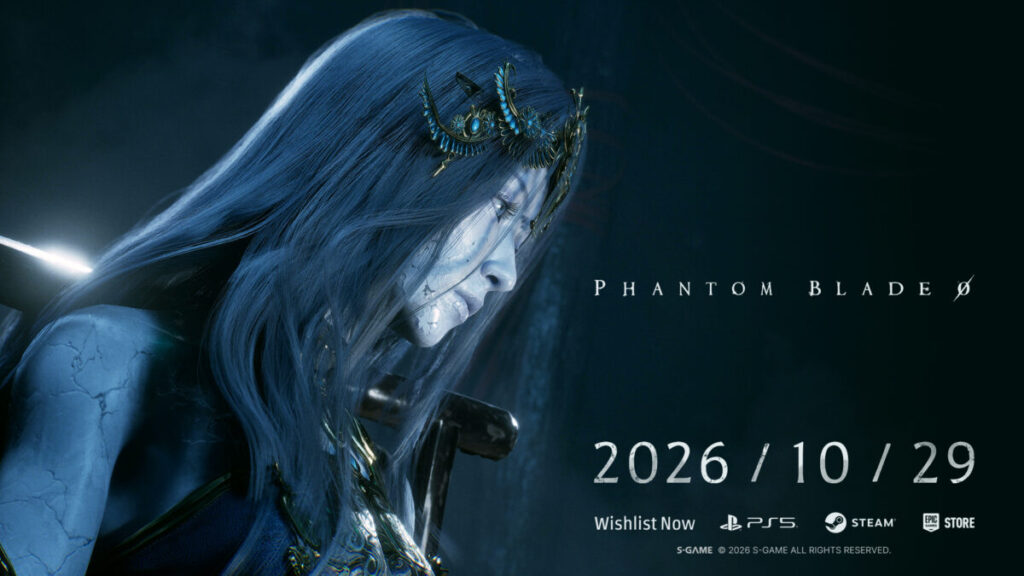
Phantom Blade Zero launched simultaneously worldwide at 02:00 UTC on October 29, 2026. That was 10 p.m. Eastern and 7 p.m. Pacific on October 28. The U.S. PlayStation product page and Steam listing display different calendar dates because the global launch fell on different dates in different time zones. The release date is not evidence of a delayed version on either platform.
An action game for players who care about expression
Phantom Blade Zero’s strongest appeal is not simply difficulty. It is the possibility of learning a combat vocabulary broad enough that different weapons and techniques can express different approaches. For players who enjoy mastering responsive action systems, discovering new abilities and learning demanding boss patterns, the critical evidence is unusually encouraging.
The reasons to hesitate are equally clear. If story coherence is central to your enjoyment, both major independent sources reviewed here raise concerns. If controller remapping is essential, the available accessibility documentation suggests a limitation. If you expect a Soulslike structure, the game’s own design emphasis—and the reviewers’ interpretation of it—point somewhere else.
That makes this an easier game to recommend to a particular audience than to everyone. It’s built around a confident mechanical identity, and the biggest complaints seem to concern the journey connecting the fights rather than the fights themselves.
The verdict: spectacular martial arts with some narrative loose ends
Phantom Blade Zero appears to be a particularly promising choice for players who value expressive, demanding action and imaginative boss encounters. Its combat earns detailed praise from independent reviewers, and the exploration seems designed to reward curiosity with more than cosmetic trinkets.
But beautiful choreography does not automatically carry a story. The uneven narrative delivery and occasional pacing slowdowns matter, especially for anyone looking for a richly told adventure first and a fighting system second. Accessibility limits and platform-specific technical reports also deserve individual consideration.
If you’re looking for an action game whose mechanics and world encourage experimentation, the evidence makes a strong case for Phantom Blade Zero. If you need a tightly explained plot or extensive control customization, approach it with more caution. Its identity is clear, even when its storytelling isn’t.
For earlier coverage of the game’s launch mechanics, see Reespawn’s Phantom Blade Zero news report.