
The strange comfort of a world falling apart
Few gaming series have built such a recognizable rhythm from the simple act of running between concrete barriers. A burst of gunfire, a sprint to the next slab of cover, that half-second of uncertainty before lifting your head: Gears of War made this loop feel weighty long before the broader industry borrowed its language. In 2026, revisiting it presents a curious problem. Does a familiar formula become refreshing because other major shooters have moved on, or does familiarity eventually expose how little the formula has changed?
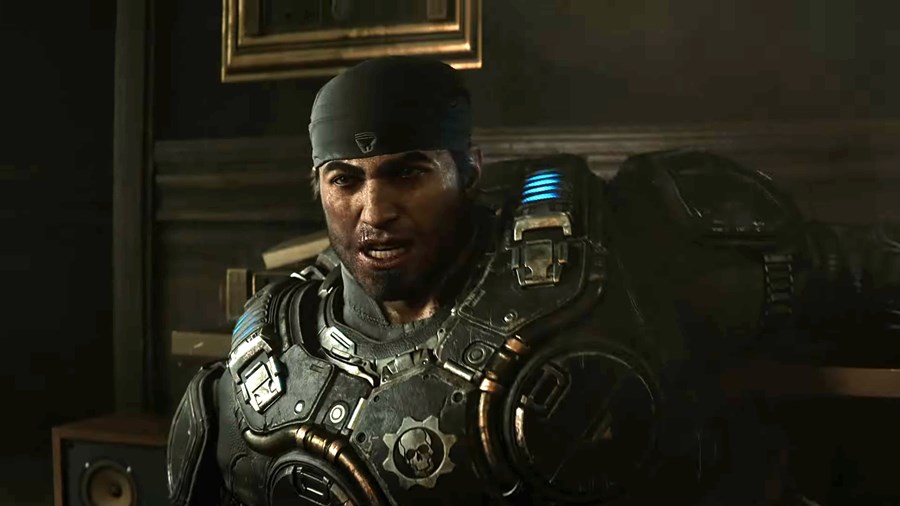
Gears of War: E-Day brings the series back to the catastrophe that started everything. Marcus Fenix and Dominic Santiago face the earliest days of the Locust invasion as the city of Kalona collapses around them. Xbox confirmed the worldwide October 6 launch on Xbox Series X|S, PC and Game Pass, following premium early access on October 1. Its launch guide describes a cover shooter that now includes more open areas, side activities and weapon modifications.
This is a research-based Critical Overview, not a claim that Reespawn has completed the campaign or played online matches. The independent reviews make one conclusion particularly interesting: critics largely respect how E-Day plays, yet disagree sharply about how long its campaign can maintain that excitement.
A prequel where the ending isn’t the point
Prequels have a built-in limitation. Players familiar with the franchise know that Emergence Day is not going to end with humanity celebrating a tidy victory. The attraction lies instead in the experience of watching a known catastrophe unfold, particularly through characters whose later lives have already been shaped by it.
Xbox describes the narrative as taking place fourteen years before the original game. By moving the setting back to the first eruption of the Locust Horde, E-Day can restore an element that long-running combat franchises frequently lose: fear of the enemy. These creatures are not yet just familiar targets in a well-understood war. They are a sudden, overwhelming threat. The official game page makes that darker tone a central selling point.
Game Informer responds strongly to the return, reading it as a revitalization rather than a retreat. What matters in that interpretation is not whether the developers reinvent every mechanic. It is whether familiar weapons, characters and imagery carry fresh urgency in a more vulnerable historical moment.
Still, a prequel needs more than continuity references. Its story must earn time spent with Marcus and Dom when the outline is already known. For readers less attached to the pair, the value of that emotional return may be lower than the intensity of individual combat scenarios.
Cover shooting that remembers why it worked
Across the reviewed coverage, E-Day’s strongest case is its combat. The series’ signature relationship between exposure and protection remains intact, but Xbox documents additional mobility options, including jumping, vaulting and sliding, along with weapon customization and tactical use of different loadouts. Those changes sound incremental on paper. In a game where timing and position are everything, even small improvements to movement can reshape how a fight flows.
PC Gamer is particularly positive about the moment-to-moment shooting and multiplayer despite serious reservations about the campaign. TechRadar similarly finds the weapons and encounters satisfying, especially in the opening and closing stretches. That’s a meaningful agreement from writers who don’t reach the same overall conclusion.
The game’s weapons still depend on tactical range. Xbox’s walkthrough distinguishes the Gnasher’s close-quarters usefulness from the Longshot’s longer-distance role, while encouraging players to adjust their loadouts at caches. Melee and blind fire also remain important. The result is a shooter that asks players to use space and timing rather than simply hold the trigger until the encounter ends.
This is where the retro identity seems beneficial. Modern shooters often prize constant motion, enormous arsenals or sprawling progression systems. Gears’ relatively readable combat language gives encounters a clear shape: hold ground, recognize a threat, then move decisively when cover stops being safe. The risk is that a compelling pattern repeated too frequently can start feeling like an obligation.
A campaign that may overstay its welcome
The central disagreement among reviewers concerns pacing. TechRadar admires the early and late encounters but describes the middle as drawn out. PC Gamer is more severe, arguing that a long chain of battles makes the campaign exhausting even while the gunplay remains excellent. Game Informer, by contrast, sees the broader package as a strong return to form.
This matters because criticism of repetitive combat isn’t the same as criticism of bad combat. A game can have excellent weapons, clear enemy feedback and enjoyable movement while still relying on similar situations too often. Repetition can erode the impact of the encounters that were satisfying the first few times. Conversely, fans who specifically want an extended return to the franchise’s combat loop may regard a longer campaign as a generous feature rather than wasted time.
E-Day also experiments with larger areas and optional diversions. Xbox says side missions can add context and reward weapon modifications, while collectibles provide extra lore. These systems offer opportunities for breathing room, but they can also complicate pacing if the main story is already struggling to keep momentum. The best question isn’t whether the campaign has side content. It’s whether that content makes the world more meaningful without interrupting its urgency.
Anyone considering E-Day primarily as a solo narrative adventure should take those mixed reactions seriously. They do not invalidate its strengths, but they make this a more conditional recommendation than the spectacle alone suggests.
Multiplayer gives the package another identity
Fortunately, the campaign isn’t the only way E-Day tries to justify its place in the series. Xbox’s official descriptions outline Horde Siege, a cooperative PvE mode, along with traditional competitive Versus options. Players can tackle the campaign alone, through console split-screen for two players, or online with up to four players. Note that console split-screen and online modes have different platform and subscription requirements.
Horde Siege expands the familiar wave-survival idea with squad classes and larger battlefields, according to Xbox’s launch information. That’s more than a bonus menu item: cooperative battles can make Gears’ cover-based tactics feel different because players are coordinating positions and rescuing one another. A frustratingly difficult enemy in solo play may become an entertaining shared problem with friends.
PC Gamer’s strong response to multiplayer suggests the mode has genuine appeal beyond nostalgia. Still, a multiplayer game’s long-term health depends on matchmaking, balance, servers and continued support. We have not independently verified current player populations or a post-launch balance patch history. It would be premature to claim that E-Day’s online community will remain healthy for months or years.
For a buyer intending to play with friends, multiplayer is a major factor in the decision. For someone who rarely touches anything beyond the campaign, it should not be used to hand-wave away concerns about repetition.
The visual overhaul does real work
The Coalition built E-Day on Unreal Engine 5, and visual fidelity is another repeated point of praise. TechRadar is impressed by its technical presentation, and the official material emphasizes a darker, more grounded look for the Locust invasion. In this context, graphical detail matters because it supports the emotional premise: the world should feel familiar enough to be worth defending and frightening enough to make every encounter consequential.
But visuals should not be confused with universally smooth performance. TechRadar describes its own results on a powerful PC, not a range of mainstream machines. The game’s PC requirements and console specifications should be checked against the hardware used by individual readers. Specific frame-rate targets are also dependent on platform, display, settings and updates. We cannot responsibly turn one reviewer’s test into a promise for every player.
Accessibility deserves mention as well. TechRadar documents options involving subtitles, UI text, narration, color-blind support and content filters. That’s useful for players deciding whether they can tailor the experience to their needs, though a full accessibility assessment would require more detailed firsthand evaluation than our sources provide.
Who should step into Emergence Day?
E-Day’s audience splits along a surprisingly simple line. If you miss the deliberate rhythm of cover shooters and want a muscular game that celebrates that tradition, its combat looks like the main attraction. If you want a tightly paced campaign that constantly invents new situations, the critical debate around its middle chapters is a legitimate warning.
Returning fans also have an emotional advantage. Marcus and Dom’s early history carries more weight when players already know what the franchise will put them through. Newcomers may still appreciate the starting point, but they may not respond to the characters’ significance in quite the same way.
For groups, the multiplayer and cooperative modes improve the value proposition. There is a difference between looking forward to fifteen hours of cover shooting alone and making those battles the centerpiece of a weekend with friends. E-Day seems much better positioned when the buyer knows which version of that experience they’re after.
The verdict: refined action that doesn’t always know when to stop
Gears of War: E-Day looks like a strong return for players who want deliberate cover shooting, brutal action and cooperative chaos. The underlying combat has enthusiastic support across multiple independent reviews. Its technical presentation and darker prequel setting offer something substantial to established fans.
The reservation is the campaign’s endurance. Multiple critics report that even excellent encounters can lose their edge when the game keeps extending the same rhythm. If you’re buying solely for a concise, brilliantly paced story, that could be a serious drawback. If you’re buying for the action systems and plan to spend time in co-op or multiplayer, the balance is more favorable.
E-Day may not be a reinvention of Gears—and it probably doesn’t need to be. Its more difficult challenge is showing enough restraint to keep what works feeling powerful. Based on the available evidence, it succeeds most convincingly when the combat gets room to breathe.